
Panic Attack Therapy in the West Valley
If you had a panic attack this week, you probably went looking for two things. One is an explanation, and the other is a way to make sure it never happens again. This page has the first one. The second one is what therapy is for, and it works better than most people expect.
I treat panic at my Goodyear office and by video anywhere in Arizona. If you had one this week, text me today and I will find a time for the free call. You do not need to explain it well.
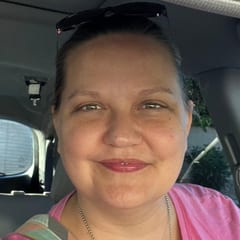 Emily Ward, MS, LAC
Counselor in Goodyear, and online across Arizona
Emily Ward, MS, LAC
Counselor in Goodyear, and online across Arizona
Is this you?
- Your heart raced, your chest tightened, you could not get a full breath, and you were sure something was badly wrong.
- You went to urgent care or the emergency room and everything came back normal.
- Now you are watching your body all the time, waiting for the next one.
- You have started avoiding places where it happened, or places where you could not get out fast.
- You are tired from being braced.
What a panic attack is
A panic attack is your body’s emergency system going off with nothing to respond to. Your brain sends the signal it would send if you were in real danger, and your body does what it is built to do. Adrenaline goes up. Your heart speeds up to move blood to your muscles. You breathe faster to take in oxygen. Your muscles tense. Your digestion slows, which is the nausea. The fast breathing lowers the carbon dioxide in your blood, which causes the tingling and the strange, far-away feeling.
Every one of those sensations is your body working correctly. That is why the emergency room found nothing. There was nothing to find. The frightening part is that the alarm went off without a fire, and your brain then decided the sensations themselves were the danger.
That second step is the whole problem, and it is the part therapy fixes.
Why it keeps happening
After a first attack, most people start scanning their body for the beginning of the next one. A slightly fast heartbeat after climbing stairs becomes “it is starting.” The fear itself raises the heart rate, which confirms the fear, which raises it more. Within a minute or two you are in a full attack that was set off by noticing your own pulse.
Then avoidance creeps in. You skip the freeway, the grocery store, the meeting, the long drive to Phoenix. Each thing you avoid feels like relief and teaches your brain that the place was dangerous. Your life gets smaller, and the panic gets a bigger share of it.
How I work with panic
The main approach is cognitive behavioral therapy (CBT), which works on how your thoughts about a sensation shape your reaction to it. For panic, it has three parts.
Understanding the alarm. We go through what is actually happening in your body, in more detail than this page, until the sensations stop being a mystery. People often feel a first layer of relief just from this.
Retraining the fear of sensations. This is the part that makes panic treatment different from general anxiety work. In a controlled way, with your agreement and at your pace, we practice bringing on mild versions of the sensations, such as breathing quickly for a short stretch or standing up fast, so your brain learns through experience that a racing heart is uncomfortable and safe. It sounds unpleasant. In practice it is short and planned, and it is often where people start to feel real change.
Taking your life back. We make a list of what you have been avoiding and work back through it, starting with the easiest. Each one you reclaim teaches your brain the opposite of what avoidance taught it.
For the moments when an attack is starting and you need something right then, dialectical behavior therapy (DBT) has skills built for exactly that. Several of them use cold water or intense physical sensation to interrupt the spiral. We practice them in session so they are there when you need them.
Where and when
The office is in Goodyear on Litchfield Road, near the I-10, and I am there Wednesday through Friday in the afternoons and evenings. Avondale, Litchfield Park, Buckeye, and Surprise are all a short drive away. Video sessions are available statewide from Tuesday to Friday, and panic work goes well on video. If you have been avoiding the freeway since the attack, starting by video means the drive is not the first hurdle.
In person in Goodyear
My office is at 1626 N Litchfield Rd Ste 220, Goodyear, AZ 85395, and I am there on Wednesdays, Thursdays, and Fridays with afternoon and evening openings.
Online across Arizona
I see clients by video on Tuesdays, Wednesdays, Thursdays, and Fridays. You need to be in Arizona during the session, but you can be anywhere in the state.
Fees and insurance
Sessions are 50–55 minutes and cost $100 without insurance. I am in-network with Aetna/Banner, Cigna, Curative, and United Healthcare, and I take Cigna and United Healthcare employee assistance program (EAP) sessions, which are the free sessions some employers cover. The full details are on the insurance and fees page, and if your plan is not listed, ask me on the free call and I will tell you what your options are.
Questions people ask
Is this a heart problem or a panic attack?
Only a doctor can rule out a heart problem, and if you have chest pain you have not had checked, please get it checked. Once your doctor has told you your heart is fine, and it still happens, that is the signature of panic. The body is doing exactly what it would do in real danger. There is just no danger.
How fast can I be seen?
Text or email me and I will reply within 24 hours, usually much faster, with the first opening on the days you can do. I keep afternoon and evening slots, and video sessions can often start sooner than office visits.
Can panic be treated over video?
Yes. The work is mostly cognitive behavioral therapy, and it translates fully to video. Some people prefer video for panic because being at home makes it easier to practice the skills in the place they will actually use them.
How many sessions does it take?
Panic responds well to focused treatment, though how long it takes is different for everyone. If there is something underneath the panic, such as an old memory or a longer-running anxiety, that can add time, and I will tell you if I think it is there.
What does it cost?
Sessions are 50–55 minutes and cost $100 without insurance. I am in-network with Aetna/Banner, Cigna, Curative, and United Healthcare, and I take Cigna and United Healthcare EAP sessions.
Not sure yet? Here is how a first session goes
You do not have to explain anything well or decide anything on the spot. I wrote a plain walkthrough of what happens at a first appointment, from the paperwork to the moment you walk out. If you would rather talk first, the free call is fifteen minutes and you can ask me anything.